
Abacus APM – Asset Performance Management Suite
APM
Asset Performance Management Suite
OUR SOLUTION FOR OPERATIONAL EXCELLENCE
Optimised maintenance strategies & reliability practices
Asset lifecycle planning and cost optimisation
Smarter spare parts and materials management
Enhancing asset reliability
Abacus APM empowers asset-intensive organisations to get the most out of their equipment and operations by turning reliability into a strategic advantage. It enables leadership teams to unlock greater returns by asset performance management suite include:
- Maximising asset performance and uptime
- Reducing maintenance costs and unplanned downtime
- Extending asset life and optimise replacement decisions
- Strengthening governance, compliance, and risk control
- Aligning reliability strategies with business objectives
Integrated Modules
APM Suite unifies APM core, inspections, and data tools in one seamless platform for end-to-end asset management
Customisable & Scalable
Built to adapt to your operational needs, configure workflows, fields, and modules as you grow
API Integration Ready
Easily connect with ERP, CMMS, and third-party systems using secure, enterprise-grade APIs
APM Suite
OVERVIEW
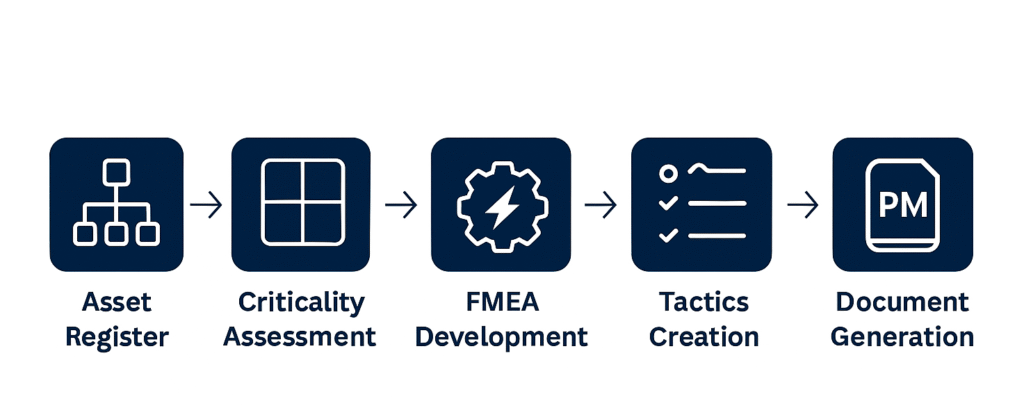
Asset performance management suite (core) is a platform designed to help organisations develop, optimise, and deploy maintenance strategies from a single, integrated environment. It combines asset information, criticality assessment, FMEA development, task creation, and tactic management into a streamlined workflow that drives standardisation and reliability. With built-in document generation and ERP-ready master data output, APM serves as a one-stop tool for transforming maintenance planning into actionable, scalable execution.
BENEFITS
Delivering measurable value to asset-intensive organisations by streamlining maintenance strategy development and enabling efficient, standardised execution at scale. Key benefits include:
- Standardised, ISO 14224-Aligned Data
- Detailed Asset Information Management
- Risk-Based Asset Criticality Management
- End-to-End Maintenance Strategy Management
- Automated Maintenance Document Generation
- Seamless ERP-Ready Master Data Output
“Accelerate your maintenance and reliability program—Abacus APM enables end-to-end maintenance strategy development, turning risk-based insights into actionable PM documentation in one seamless flow.”
CORE FEATURES
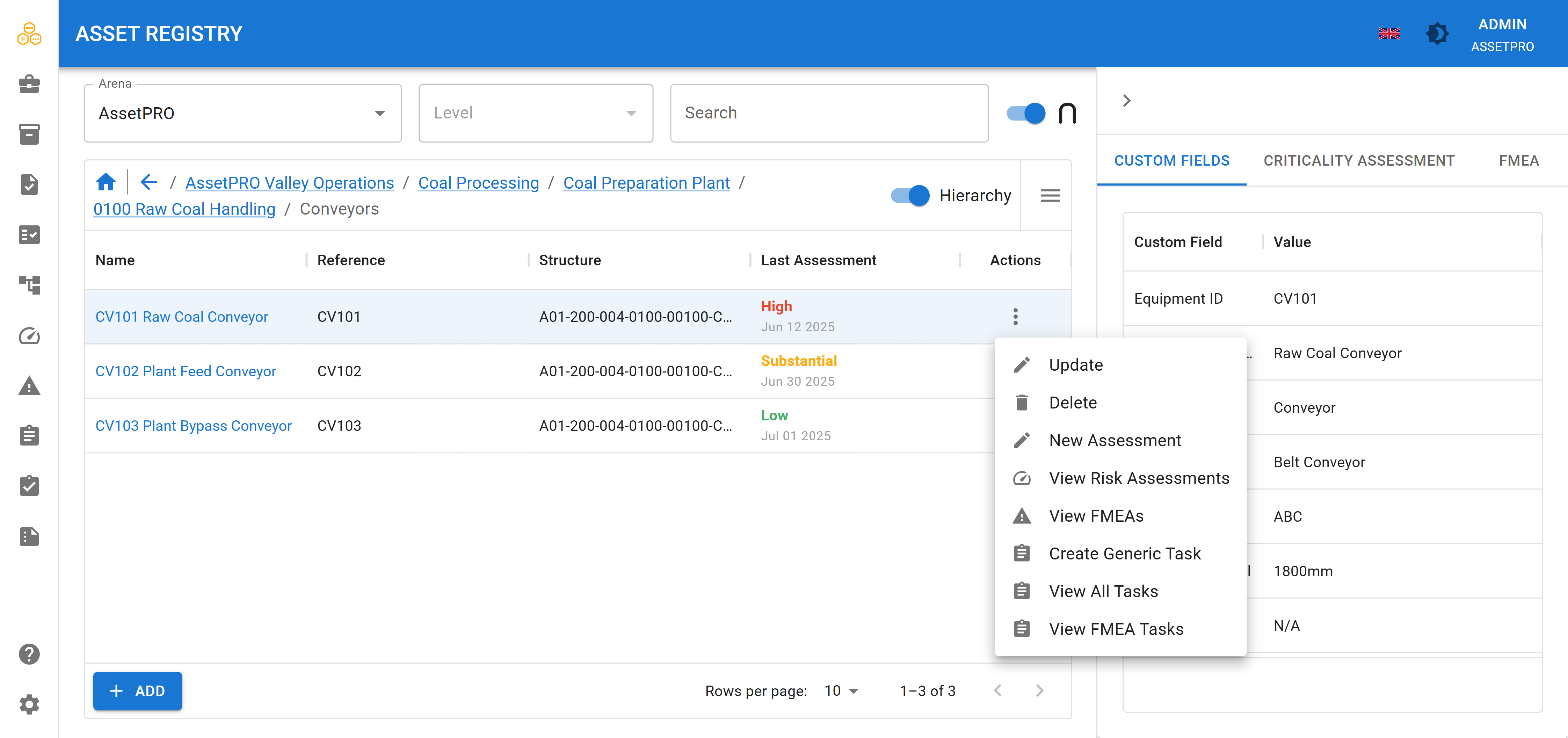
Asset Register
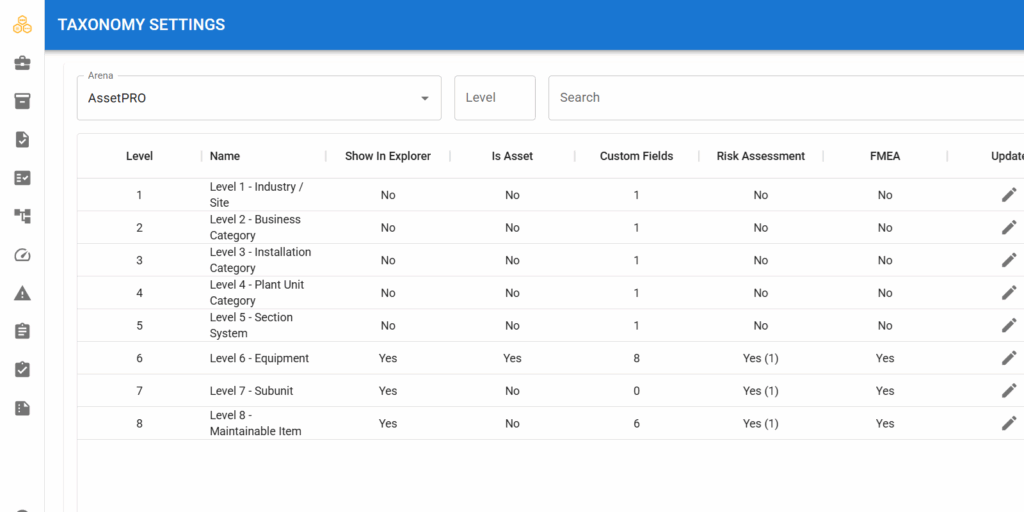
Asset Register with Full Taxonomy Management: Structured repository of all physical and functional assets, organised hierarchically based on ISO 14224 taxonomy principles. This includes grouping assets by class, subclass, type, and location, allowing for consistent asset identification, traceability, and analytics across the organisation.
Asset Criticality
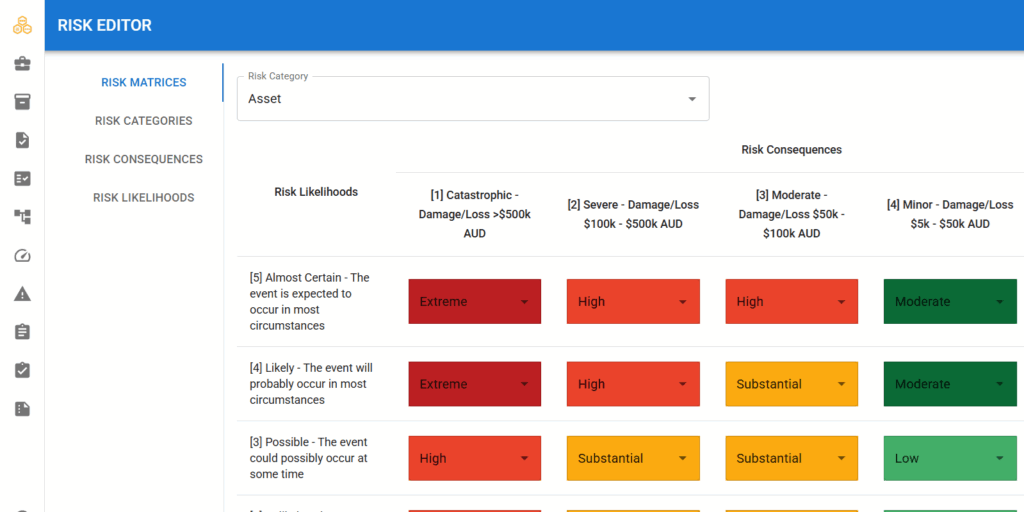
Criticality Assessment Using a Configurable Risk Matrix: Structured process to assess the relative importance of each asset based on its impact on safety, environment, production, and cost. The platform enables a configurable risk matrix where users can define likelihood and consequence scales, enabling consistent and justifiable prioritisation of assets for maintenance and monitoring.
FMEA
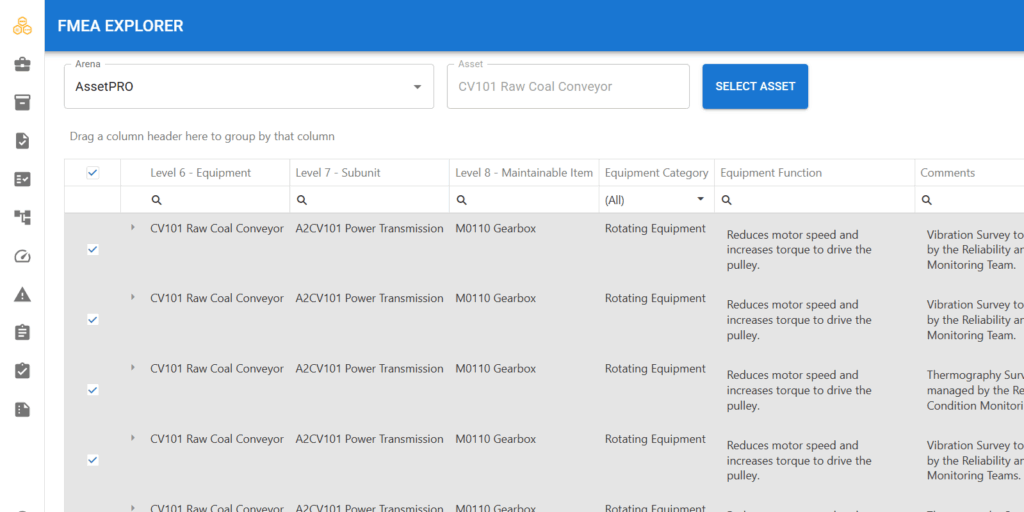
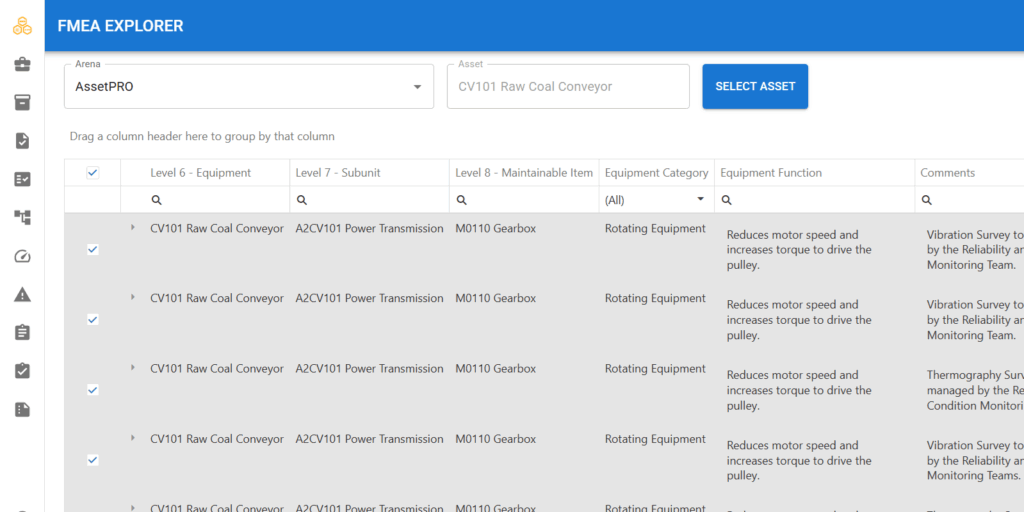
FMEA Development for Risk-Based Maintenance:
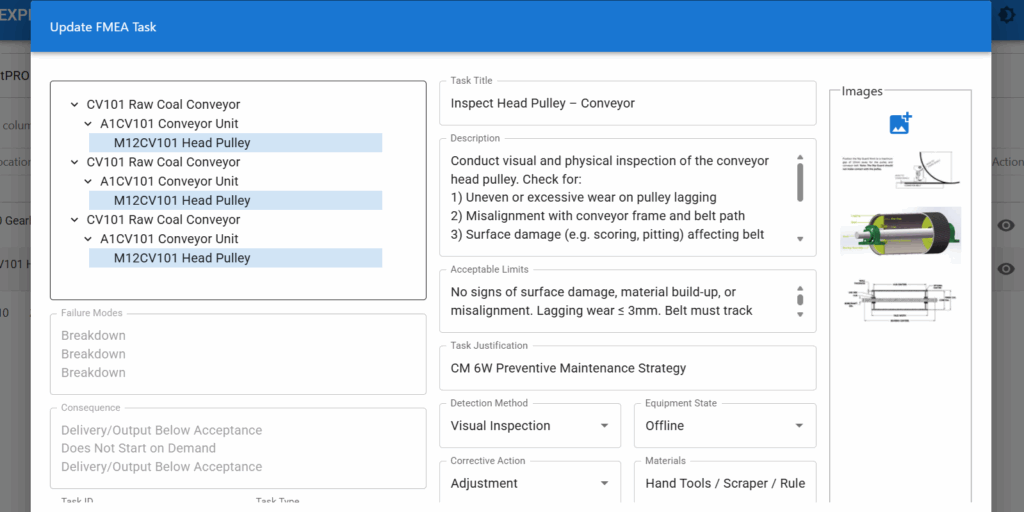
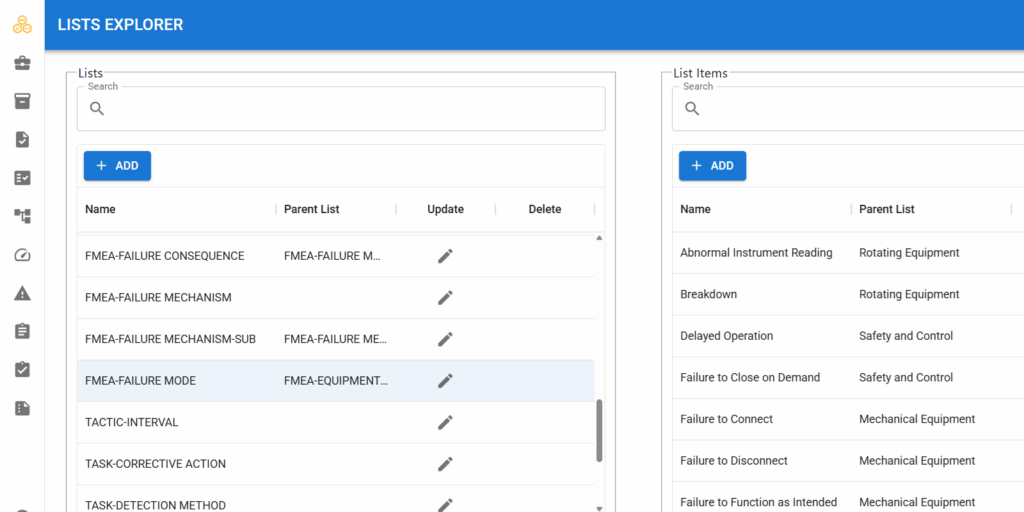
A systematic method for analysing and assigning potential failure modes within Equipment Subdivisions, assessing their causes and consequences. The FMEA manager enables the structured capture of failure modes, mechanisms, causes, and mitigation actions—forming the backbone of Reliability Centred Maintenance. The platform can be deployed with built-in ISO 14224-compliant maintenance and failure code libraries, allowing organisations to accelerate standardisation, improve data quality, and ensure consistency across asset classes and maintenance strategies.
Maintenance Tasks
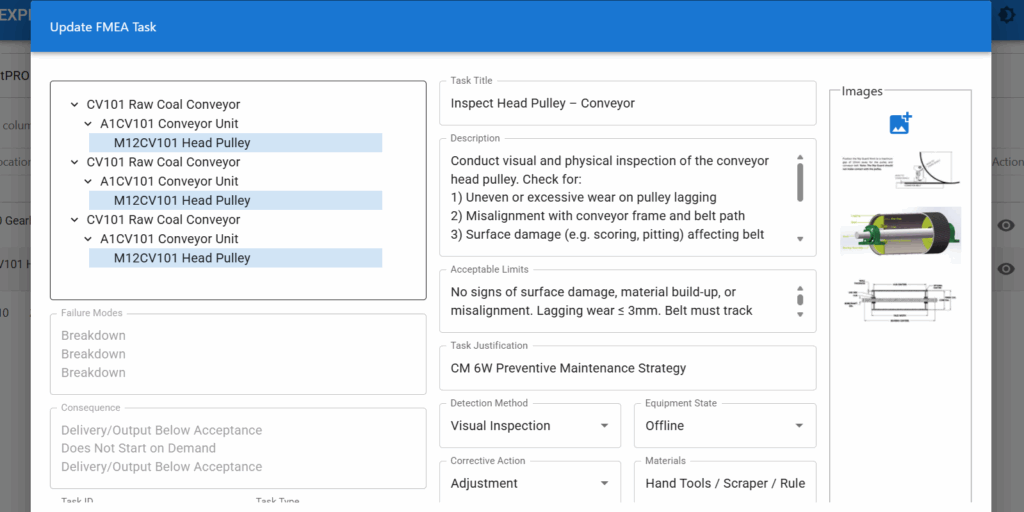
Task Creation Linked to Identified Failure Modes:
Maintenance tasks are created directly from FMEA analysis, including detailing actions, trades, manning, durations, and required resources, ensuring that every preventive or corrective action addresses a specific failure mode. This traceability ensures relevance, improves effectiveness, and aligns with reliability-centered maintenance principles.
Generic Task Creation for Non-FMEA Activities:
Generic tasks are used for activities not linked to failure modes, such as inspections, cleaning, audits, and QHSE tasks. They include defined actions, trades, manning, durations, and required resources, enabling consistent planning and execution of routine and compliance-based work.
Maintenance Tactics
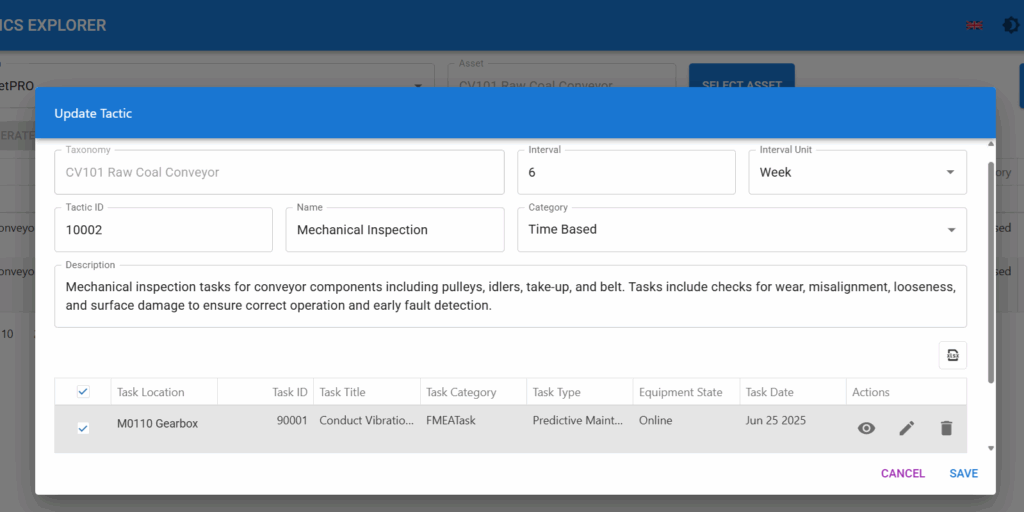
Tactic (Maintenance Strategy) Creation:
Tactics represent grouped maintenance strategies derived from tasks, specifying the how, when, and who of execution. Each tactic includes:
- Tactic ID, name, asset link, and description
- Frequency and interval unit (e.g., 6 weeks, 500 hours)
- Strategy category (e.g., time-based or condition-based)
- Trade (responsible personnel/discipline)
- Tools and Materials (required to perform the task)
- Grouped tasks by asset location, asset type, asset state (online / offline), plant area, discipline (e.g. Mech, Elect, Struct), Statutory, etc.
Document Generator
Automated PM Document Generation from Defined Tactics:
Within the Tactics Explorer, users can generate Preventive Maintenance (PM) documents directly from one or multiple selected tactics. Documents are produced in structured .docx and .pdf formats and can be previewed before export. Using configurable templates, the system supports bulk generation of job plans, inspection checklists, and work instructions, which are exported as a zipped file for efficient distribution or upload. This ensures fast, standardised documentation aligned to ERP requirements, supporting both digital workflows and printed formats for field execution.
Master Data Output
Master Data Export for ERP Systems:
Structured asset and maintenance data ensures alignment with ERP master data requirements, enables efficient upload to ERP systems, and supports digital transformation by reducing manual data entry and standardising maintenance strategy deployment. This includes:
- Asset Register with full taxonomy and equipment attributes
- Maintenance Task Lists detailing actions, trades, manning, durations, and required resources
- Maintenance Tactics packaged with execution intervals, job steps, tools, materials, and assigned asset locations
- Other Custom Data as per client’s specifications




“Develop and optimise your maintenance strategies with precision, and rapidly deploy PM documents, work instructions, and master data across your enterprise with Abacus APM, your intelligent platform for asset reliability.”
“Intelligent asset strategies, powered by your data and next-gen AI.”
Supporting Modules
OVERVIEW
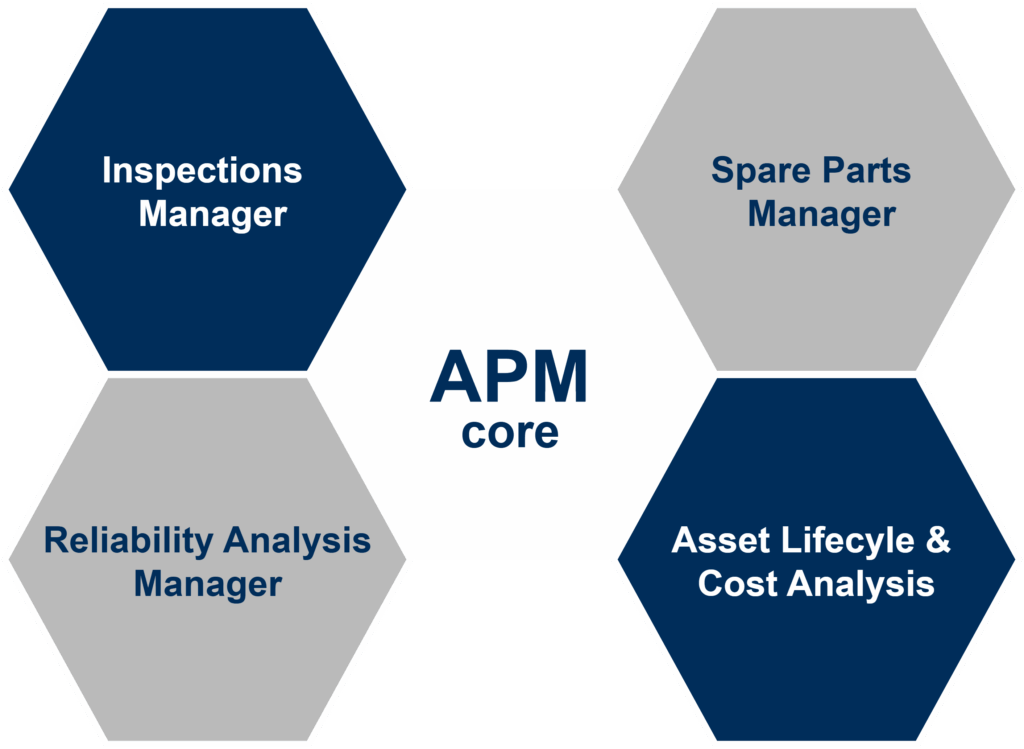
Our supporting modules are purpose-built to enhance the core capabilities of Abacus APM, providing end-to-end visibility, control, and optimisation across your asset operations.
BENEFITS
Seamlessly integrated with each other and with ERP systems, the supporting modules empower proactive maintenance planning, minimise downtime, enhance compliance, and drive strategic asset decisions. Each module is fully scalable and customisable, allowing organisations to deploy only what they need — delivering maximum flexibility and value.
“Whether you’re managing spare parts, analysing reliability trends, planning lifecycle costs, or scheduling field inspections, these modules integrate seamlessly to unlock deeper insights and operational efficiency.”
Support Features
Inspections Manager
Deployed across field and plant operations, Abacus Inspections is a robust, project-based solution for plant, equipment, integrity, and safety inspections.
Benefits:
- Customisable inspection workflows for compliance and audit readiness
- Mobile-enabled data capture with offline sync for remote environments
- Supports warehouse inventory, spare part tracking, and maintenance inspections
- Real-time KPI tracking, reporting, and data exports for transparency
Spare Parts Manager
-Coming Soon-
Integrated with the APM asset register and inspection data, this module improves inventory reliability and reduces downtime.
Benefits:
- Intelligent spare part identification linked to assets
- Stock level monitoring, usage analytics, and reorder optimisation
- Syncs with inspection findings and maintenance plans
Reliability Analysis Manager
-Coming Soon-
Built for engineers and analysts, this module unlocks actionable insights from operational history.
Benefits:
- Trend analysis using MTBF, MTTR, and failure mode categorisation
- Supports continuous improvement and strategy validation
- Visualise patterns across asset types and locations
Asset Lifecycle & Cost Analysis
-Coming Soon-
Plan your asset investment with confidence by understanding total lifecycle cost.
Benefits:
- Total Cost of Ownership (TCO) modelling and replacement planning
- Aligns asset strategy with financial forecasting
- Links with maintenance plans and inspection outcomes
- Supports long-term CAPEX and OPEX budget planning




Overview of the Inspections Manager
Abacus asset performance management suite built-in Inspections Manager provides tailored inspection workflows and ensures streamlined reporting, compliance, operational transparency, and flexible deployment across a range of inspection and asset management activities.
Field execution is enabled via a mobile app, allowing designated users, operators, and inspectors to capture data and images offline, with automatic cloud sync when connectivity is restored—ideal for remote and field-based operations.
Designed for operational environments such as industrial facilities, processing plants, factories, construction sites, warehouses, and remote mining operations.
INSPECTION TYPES
- Asset Integrity and Compliance Inspections
- Plant and Equipment Condition Assessments
- Maintenance, Operations and Safety Inspections
- Warehouse Inventory Management
- Spare Parts Identification & Tracking
FEATURES
- Project Tracking Capabilities
- Inspections and Operator KPI Reporting
- Data Import/Export and Multi-format Reporting
Create Inspection Project
Prepare Inspection Items and Routes
Deploy Project Inspections to Mobile Devices and Initiate Inspection Routes
Review and Update Inspection Details
View or Retake Inspection Image
Monitor Project Progress-Forecast vs Actuals
AI-Powered Intelligence
Abacus APM brings the power of advanced AI models directly into your asset performance workflows. Our AI services allow users to ask natural language queries and receive intelligent responses that drive more accurate calculations and faster decision-making — all seamlessly embedded into the software. With our in-house AI Assist engine, your FMEA and Maintenance Tasks are now smarter, faster, and fully data-driven.
AI FEATURES

AI Assist – Context-Aware Guidance

Advanced Model Integration via OpenAI

Intelligent FMEA & Task Generation Engine
“AI Assist delivers intelligent, data-driven guidance to enhance asset strategy and operational decision-making.”
Contact us today to learn more about Abacus APM.
Need to enhance your asset value, boost reliability, streamline costs, and optimise operational efficiency?